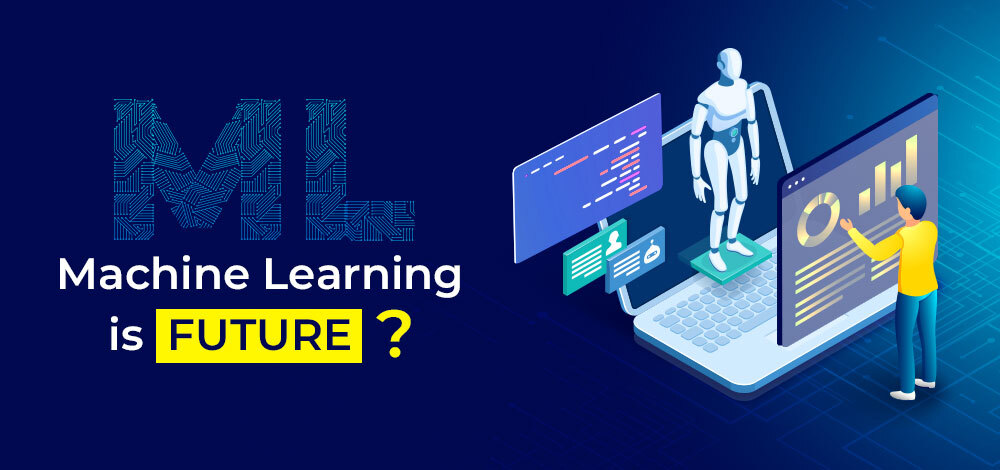
Machine learning is a way for computers to learn from data and make smart predictions without being directly programmed for every task. Unlike traditional programming, where a computer follows step-by-step instructions, machine learning allows computers to find patterns, recognize trends, and improve their accuracy over time. The more data the system processes, the better it gets at making decisions. This ability to learn and adapt makes machine learning one of the most powerful technologies shaping the modern world.
In this blog post, we will cover the basics of machine learning. We will explain how it works, the different types of machine learning, key concepts, tools, and real-world applications. By the end, you will have a solid understanding of this exciting field.
What is Machine Learning?
Machine learning is a subfield of artificial intelligence, which is broadly defined as the capability of a machine to follow intelligent human behavior. Machine learning technology can process large quantities of historical data, identify patterns, and predict new relationships between previously unknown data.
Machine learning (ML) is a type of study in artificial intelligence engaged with the development and study of statistical algorithms that can learn from data and generalize to unseen data, and thus perform tasks without direct instructions. Within a subdiscipline in machine learning, advances in the field of deep learning have allowed neural networks, a class of statistical algorithms, to surpass many previous machine learning approaches in performance.
The Evolution of Machine Learning
The concept of machine learning is not new. Its origins date back to the 1950s when pioneers like Alan Turing and Arthur Samuel began exploring the idea of computers that could "learn" from experience. Over the decades, ML has evolved significantly, from simple rule-based systems to sophisticated deep learning models that mimic human intelligence. Early applications were limited due to computational constraints, but with the rise of big data and powerful processing technologies, machine learning has flourished in recent years.
The Birth of Machine Learning (1950s–1960s)
Machine learning as a concept took shape in the 1950s when IBM researcher Arthur Samuel coined the term in 1959. Samuel, a pioneer in artificial intelligence (AI), developed a self-learning checkers program that improved its gameplay through experience. This was one of the first demonstrations of machines learning from data rather than following strict instructions.
At the same time, Donald Hebb, a Canadian psychologist, introduced a theory about how human brain neurons interact and adapt. His ideas later influenced the development of artificial neural networks, which are now widely used in deep learning. Additionally, researchers Warren McCulloch and Walter Pitts developed early mathematical models that mimicked human thought processes, further shaping the foundation of machine learning.
Early Learning Machines (1960s–1970s)
During the 1960s, Raytheon Company developed an experimental learning machine called Cybertron, designed to analyze sonar signals, electrocardiograms, and speech patterns. It used reinforcement learning and could be "trained" by a human operator, marking one of the first interactive AI systems.
Interest in pattern recognition grew, leading to the publication of key research books such as Nilsson’s "Learning Machines" (1965) and Duda & Hart’s work on pattern recognition (1973). These studies explored how computers could be programmed to recognize patterns without explicit programming for every possible scenario.
The Rise of Neural Networks (1980s–1990s)
In the 1980s, researchers made significant progress in neural networks. In 1981, a breakthrough was achieved when an artificial neural network successfully learned to recognize 40 different characters, including letters, numbers, and symbols. This proved that computers could learn from examples instead of relying on predefined rules.
The 1990s brought a major milestone in machine learning when IBM’s Deep Blue defeated world chess champion Garry Kasparov in 1997. This event demonstrated how machine learning models could process vast amounts of data, analyze patterns, and outperform human experts in strategic tasks.
The Modern Era of Machine Learning (2000s–Present)
With the growth of big data, faster processors, and advanced algorithms, machine learning has become more powerful and widely used. Deep learning, a subset of machine learning inspired by the structure of the human brain, has fueled breakthroughs in areas like image recognition, natural language processing, and autonomous driving.
Today, machine learning is everywhere—powering virtual assistants, predicting diseases, automating financial decisions, and even driving cars. The field continues to evolve rapidly, with new research and innovations expanding the capabilities of AI and transforming industries worldwide.
Types of Machine Learning
Machine learning comes in four main types, each designed for different kinds of tasks. Here’s a simple breakdown:
1. Supervised Learning
This is the most common type of machine learning. The model is trained using labeled data—basically, examples that already have the correct answers. Think of it like teaching a kid with flashcards: "This is an apple, this is a banana." Over time, the model learns to make predictions on new, unseen data. A classic example is spam detection in emails.
2. Unsupervised Learning
Here, the model isn’t given any labeled data. Instead, it looks for patterns on its own, kind of like how we recognize trends without being told what they are. It groups similar things together (clustering) or finds unusual data points (anomaly detection). A good example is how Netflix recommends shows based on what you’ve watched.
3. Semi-Supervised Learning
Sometimes, labeling data is expensive and time-consuming. That’s where semi-supervised learning comes in—it starts with a small amount of labeled data and then figures out the rest on its own. It’s like giving a student a few examples of how to solve a problem and letting them figure out similar ones by themselves. This approach is useful in areas like medical imaging, where only a few scans are labeled by doctors.
4. Reinforcement Learning
This type of learning is all about trial and error. The model makes a move, gets feedback (good or bad), and adjusts its strategy over time. Think of how a video game character learns to navigate obstacles or how a self-driving car learns to avoid collisions. It’s used in robotics, gaming, and complex decision-making tasks.
Understanding these four types of machine learning can help businesses and researchers choose the right approach for their needs.
Benefits of Machine Learning
Machine learning is transforming industries by enhancing efficiency, automating complex tasks, and enabling data-driven decision-making. It allows businesses and organizations to analyze vast amounts of data, uncover hidden patterns, and generate valuable insights that drive innovation and growth. By leveraging machine learning, companies can optimize operations, improve customer experiences, and gain a competitive edge in their respective markets. As technology continues to evolve, the benefits of machine learning will only expand, creating new opportunities for businesses worldwide. Below are the some benefits of Machine Learning :
Smarter Decision-Making
Machine learning helps businesses analyze huge amounts of data quickly and accurately. It can spot patterns that humans might miss, even in fast-changing environments. This allows companies to make smarter, data-driven decisions in real time, adjust to new challenges, and reduce risks with confidence.
Automating Tedious Tasks
Nobody enjoys spending hours sorting data, scanning documents, or transcribing audio. Machine learning takes over these repetitive tasks, making work faster and more efficient. By automating routine processes, businesses save time, cut costs, and reduce human errors.
Better Customer Experiences
We’ve all seen product recommendations while shopping online or personalized movie suggestions on streaming platforms. That’s machine learning at work! It helps businesses understand customer preferences and offer personalized experiences, keeping customers engaged and loyal.
Smarter Resource Management
Businesses use machine learning to predict trends and manage resources more efficiently. For example, stores can anticipate which products will be in demand and stock up accordingly, avoiding shortages or excess inventory. With better planning, companies can reduce waste and save money.
Constant Improvement
One of the best things about machine learning is that it keeps getting better over time. The more data it processes, the more accurate and efficient it becomes. This means businesses using machine learning aren’t just keeping up—they’re constantly improving and staying ahead of the competition.
Challenges and Concerns of Machine Learning with Solutions
Machine learning is revolutionizing industries by automating processes, improving efficiency, and enabling data-driven decision-making. However, despite its potential, ML comes with a set of challenges and concerns that can hinder its effectiveness. From data issues to ethical concerns, understanding these challenges is crucial for businesses and researchers. Fortunately, there are solutions to address these problems and ensure responsible, efficient, and fair use of machine learning technologies. Below, we explore some of the key challenges in ML and the steps to overcome them.
1. Data Quality and Availability
- Challenge: Machine learning models heavily rely on large, high-quality datasets for training. However, data can often be incomplete, noisy, or biased, leading to inaccurate or unreliable predictions. Some industries also struggle with data scarcity, making it difficult to train effective models.
- Solution: Organizations should focus on data cleaning, augmentation, and collection from diverse sources. Techniques like synthetic data generation and transfer learning can help mitigate data shortages, while preprocessing methods can improve data quality.
2. Bias in Machine Learning Models
- Challenge: Machine learning models learn from historical data, which may contain biases. If not properly managed, these biases can result in unfair or discriminatory outcomes, particularly in hiring, lending, healthcare, and law enforcement.
- Solution: To reduce bias, developers should use diverse and representative datasets. Bias detection tools, fairness-aware algorithms, and regular audits can help identify and mitigate biased predictions. Transparency in model training processes also plays a key role in fairness.
3. Interpretability and Transparency
- Challenge: Some machine learning models, particularly deep learning networks, operate as "black boxes," meaning their decision-making process is difficult to understand. This lack of transparency can make it hard for stakeholders to trust the model’s predictions.
- Solution: Explainable AI (XAI) techniques, such as SHAP and LIME, can help make models more interpretable. Where possible, using simpler models like decision trees instead of deep neural networks can also improve transparency and trust.
4. Overfitting and Generalization Issues
- Challenge: Overfitting occurs when a model performs well on training data but poorly on new, unseen data. This happens when the model memorizes patterns instead of learning general trends, reducing its real-world applicability.
- Solution: Regularization techniques, cross-validation, and increasing training data diversity can help prevent overfitting. Techniques like dropout and early stopping in neural networks also enhance model generalization.
5. Security and Privacy Risks
- Challenge: Machine learning models can be vulnerable to adversarial attacks, where small changes in input data lead to incorrect predictions. Additionally, using personal data for training raises privacy concerns and potential regulatory issues.
- Solution: Implementing strong encryption methods, differential privacy techniques, and federated learning can protect user data and enhance model security. Regular security audits can also help identify vulnerabilities.
6. High Computational Costs and Resource Requirements
- Challenge: Training large machine learning models requires powerful hardware, significant computing power, and high energy consumption. This makes ML adoption expensive for small businesses and research institutions.
- Solution: Cloud-based ML platforms offer scalable and cost-effective solutions. Techniques like model pruning, quantization, and efficient algorithms help reduce computational costs while maintaining accuracy.
7. Lack of Skilled Professionals
- Challenge: The rapid growth of AI and ML has led to a talent shortage, with demand for skilled data scientists, machine learning engineers, and AI specialists far exceeding supply. Many organizations struggle to find and retain qualified professionals.
- Solution: Companies should invest in upskilling existing employees through online courses, workshops, and certifications. No-code AI platforms and automated ML tools can also enable non-experts to build and deploy ML models.

Machine Learning Algorithms
Machine learning algorithms help computers learn from data and make decisions without being directly programmed. Once trained, these algorithms create models that can predict outcomes or find patterns in data. They can be used to recognize objects in images (like identifying cats), detect fraud, or suggest products based on shopping history.
Here are some common machine learning algorithms:
Neural Networks – These are inspired by how the human brain works. They contain layers of connected nodes that process information. Neural networks are great for recognizing patterns, such as identifying objects in pictures or understanding speech.
Linear Regression – This algorithm predicts outcomes by finding a straight line that best fits the given data. For example, doctors use linear regression to estimate a child’s future height based on their current growth. However, since it uses a simple line, it may not always be accurate, especially for complex data.
Logistic Regression – This is used when the answer is either "yes" or "no" (binary outcomes). It helps in making decisions like predicting whether an email is spam or if a transaction is fraudulent. In healthcare, it can be used to check if someone is at risk of diabetes based on their blood sugar levels.
Clustering – This algorithm groups similar items together without needing labels. For example, if analyzing different types of fruits, it might group citrus fruits separately from berries and melons. Businesses use clustering to segment customers based on their shopping behavior.
Decision Trees – These work like a flowchart with "yes" or "no" questions to make predictions. For example, a college might use a decision tree to decide if a student can skip a basic English course by checking their grades and test scores. They are simple and easy to understand but can sometimes be too rigid.
Random Forests – This is an improved version of decision trees. Instead of using just one tree, it uses multiple trees to make better decisions. If a college is deciding which students can skip English 101, a random forest might consider different factors separately and then combine the results to make a fair decision.
Conclusion
Machine learning is a powerful tool that is transforming industries by enabling computers to learn from data and make intelligent predictions. From healthcare to finance to marketing, ML is improving efficiency, accuracy, and decision-making, leading to better outcomes and new opportunities. In healthcare, it helps diagnose diseases early and personalize treatments. In finance, it detects fraud and automates trading. In marketing, it enhances customer targeting and personalization.
As ML continues to evolve, understanding its different types—supervised, unsupervised, and reinforcement learning—can help in choosing the right approach for various applications. However, challenges such as data quality, model bias, and ethical concerns must be addressed to ensure responsible AI development. By learning and adapting to these advancements, individuals and businesses can harness the full potential of ML and drive innovation in the future.
FAQs (Frequently Asked Questions)
How will Machine Learning shape the future of technology?
Machine learning will drive advancements in AI, automation, and data analysis. It will improve industries like healthcare, finance, and transportation by making systems smarter, faster, and more efficient. Future innovations like self-driving cars, AI assistants, and personalized medicine will heavily rely on ML.
Will Machine Learning replace human jobs?
ML will automate repetitive tasks but won’t replace human creativity, problem-solving, and decision-making. Instead, it will create new jobs in AI development, data science, and ML system management. People with ML skills will be in high demand.
How will Machine Learning impact healthcare?
ML will revolutionize healthcare by enabling faster disease diagnosis, personalized treatments, and medical predictions. AI-driven robots might assist in surgeries, while ML models can detect diseases like cancer at early stages, improving patient outcomes.
How can I learn Machine Learning for free?
There are many free resources to learn ML, including:
- Coursera & edX (Free ML courses from top universities)
- Kaggle (Hands-on ML projects and datasets)
- Google's Machine Learning Crash Course (Beginner-friendly)
- YouTube (Tutorials from ML experts)
What is the difference between AI and Machine Learning?
- AI (Artificial Intelligence) is the broad concept of machines simulating human intelligence.
- ML (Machine Learning) is a subset of AI that focuses on learning from data to make predictions without being explicitly programmed.
What are the top 3 programming languages I should learn before starting Machine Learning?
- Python – Most widely used for ML due to libraries like TensorFlow, Scikit-learn, and PyTorch.
- R – Great for statistical analysis and data visualization.
- Java – Used in large-scale ML applications and enterprise-level solutions.
Thanks for Reading!







No comments:
Post a Comment